Tuesday, January 21, 2014

REMEMBRANCE: TRIBUTE TO SOLDIERS


World War II Tribute (00:05:33m)


We are a nation of hero-worshippers yet we know more about fictional characters like Batman, Ironman and the Green Lantern - even Rambo is regaled as a superhero. But we seldom pay our respects to the real heroes - soldiers, whose acts of valor have elevated them far above the common thread. Sadly, few of us can name more than one or two war heroes.

This blog is in memory of soldiers who went beyond the call of duty, whose bravery was awe-inspiring, and who sacrificed their life for freedom and justice. Only a few among them have been praised as heroes but just to have taken up arms and forged bravely into battle has made heroes of them all.

Here are but a few of the soldiers who have earned their place in history as real Super Heroes. Their courage serves not only inspire us but restores our faith in the great power of the human spirit.


 AUDIE MURPHY

Audie Murphy, the sixth of twelve siblings, came from humble beginnings.He was only twelve years old when his father abandoned the family. As a result Murphy had to drop out of fifth grade and worked for a dollar per day in an effort to help his family make ends meet.  He even turned to hunting to put food on the table and the skills he attained as a marksman would serve him well.  When he reached 17 years of age, he tried to enlist in the marines and the army but was rejected twice due to his height and weight (5'5" at 110 lbs).  When Murphy finally succeeded, he quickly rose through the ranks and was promoted several times until he became company commander.  Throughout his distinguished service Murphy was decorated numerous times for his acts of valor. When his division invaded Sicily on July 10, 1943 he killed two Italian officers as they tried to escape on horseback; two months later while on night patrol at Salerno, Murphy and his men were ambushed by German soldiers, but fought their way out, killing three Germans and captured the others. His combat skills at Monte Cassino were nothing short of legendary.  By August 1944, Murphy was part of Operation Dragoon, the invasion of Southern France.  A German soldier, feigning surrender took aim and killed Lattie Tipton, Murphy's best friend. At that moment all hell broke loose as Murphy charged the enemy and single-handedly wiped out the entire German machine gun crew in retaliation.  His steely-nerved courage earned him the Distinguished Service Cross.  His other medals included the Congressional Medal of Honour, Silver Star, Legion of Merit, Bronze Star, Purple Heart, French Legion of Honour, French Croix de Guerrre, and more. After the end of the war he returned home to a heroes welcome and honoured with parades, lavish banquets and speeches.  Soon afterwards Murphy embarked on a career in acting and earned critical acclaim in the production of the Red Badge of Courage, among other films. He also wrote a book "To Hell and Back" in which he wrote about his friend Lattie.  


JOHN MALCOLM THORPE FLEMING
aka Fighting Jack Churchill, Mad Jack

John Malcolm Thorpe Fleming British WW2 hero - Mad Jack with sword in hand during a training exercise in Inveraray Scotland

John Fleming graduated in 1926 from Royal Military academy, a prestigious institution
otherwise known as "Sandhurst". For the following ten years he served in Burma with the Manchester Regiment followed by a short stint in civilian life.  But when Poland was invaded in 1939 by Germany and the Soviet Union he hastily returned to join his Regiment.  In May 1940 at L'Epinette France, Fleming earned his infamous reputation as "Mad Jack" when he attacked and killed the enemy using only barbed arrows. He was the only British soldier ever to have cut down the enemy using only a long bow.  After Dunkirk, he joined the Commandos and became second in command of his unit.  On December 27, 1941 he took part in Operation Archery in an invasion of the German garrison at Vagsoy, Norway.  As his landing craft approached the bay and the ramps were dropped ashore, Fleming lept forward like a madman while playing his bagpipes, flung a grenade at the enemy and dashed into the fighting fray.  He was decorated with the Military Cross and bar for his immense valor.


Mad Jack with sword in hand during a training exercise in Inveraray Scotland

During the invasion of Sicily, Fleming led Commando unit 2 during the landing at Catania and Salerno, armed with nothing more than a Scottish broadsword dangling at his waist, a longbow and arrows slung around his neck, and cradling his bagpipes under his arm.  At Salerno his Commandos invaded the town capturing the post and succeeded in taking 42 prisoners (which included the mortar squad).  Fleming and his men headed headed back to base while the wounded followed behind, transported in carts pushed by the German POWs.  Fleming commented that the scenario reminded him of "an image from the Napoleonic Wars".  He was decorated with the Distinguished Service Order for his valor. 

The most awe-inspiring Operation took place in Yugoslavia in 1944.  Fleming led the Commandos on a raid against German positions on the island of Brac.  With an army of 1,500 partisans, 43 Commando, and one troop consisting of 40 Commando, Fleming landed amid a hail of German fire, but decided to postpone the attack until the next day.  It was not until the second day that his company launched into battle;  as 43 Commando was moving into position along the flank, Fleming led the 40 Commando, while the partisans remained at the landing site.  Only Fleming and six other men succeeded in reaching the objective.  The rest of the unit was either killed or wounded. Legend has it that Churchill was playing on his bagpipes the tune, ""Will Ye No Come Back Again?" as the Germans advanced.

Fighting Jack Churchill was born to be a soldier and reveled in the danger and thrill of it all. When the Americans dropped the bombs on Hiroshima and Nagasaki, Mad Jack was purported to be disgruntled by the sudden end of the war.  He was reported to have said, "It it wasn't for those damn Yanks, we could have kept the war going for another 10 years


THOMAS GEORGE PRINCE
"Tommy"

Thomas George Prince was an aboriginal Canadian of the Ojibwe Nation and was born in Manitoba. He was one of eleven children and lived with his family on Brokenhead Reservation at Scanterbury. With his siblings he has the distinction of being a descendant of Chief Pequis. As a boy growing up in the wilderness Prince became an exceptionally skilled marksman and hunter. By the time he became a teenager his sights were set on joining the army.

When WW2 broke out Prince volunteered for active service but was turned down several times even though he met all the requirements. However several months later he was finally accepted and commenced training as a sapper for the Royal Canadian Engineers. He later joined the 1st Canadian Parachute Battalion and was promoted to Sergeant. And soon after volunteered for the 1st Special Service Force (SSF) also known as the "Devil's Brigade". Prince and his unit were subjected to the most rigorous of training drills, accompanied by live fire and honed their skills in hand-to-hand combat, explosive demolitions, amphibious ware, mountain fighting, and ski troops, among other disciplines.

In November 1943, the SSF were deployed to Italy with the objective of clearing enemy lines which had been preventing the Allies from advancing towards Rome. In the following two months they succeeded in capturing Monte la Difensa, Hill 720, Monte Majo and Monte Vischiataro. From there they advanced to Anzio. By early February 1944, Prince was dispatched to scout the location of several German positions near Littoria. At his stake-out in an abandoned farmhouse just 200 metres (660 fit) from enemy lines, Prince secretly reported enemy positions, through the use of 1,400 metres (4,600 ft) of telephone wire. But communications were inadvertently lost when allied artillery fire aimed at German positions accidentally cut the telephone wire. Prince was able to locate the severed wires and rejoin them. He had calmly strolled out into the open dressed as a farmer weeding his crops, and every so often kneeling down and pretended to tie his shoelaces. For added effect, he would shake his fists at the Germans. Prince then turned to the direction of the Allied lines and shook his fist at them as well. He then resumed transmitting his reports and over the course of the next day, Allied troops succeeded in destroying four German battalions. Prince spent a total of three days behind enemy lines. The Germans never knew what hit them. Prince was decorated with the Military Medal for his "courage and utter disregard for personal safety". He was "an inspiration to his fellows and a marked credit to his unit."

On June 4, 1944, Operation Dragoon was launched, and the SSF was ordered to advance to southern France. Their first objective were the Hyeres Islands, followed by Sylvabelle on the French Riviera. By the 1st of September, Prince was sent through German lines, accompanied by a soldier, private class in the mission to scout for German positions near L'Escarene. They spotted a German reserve battalion, and were on the way back to camp to submit their report when they came upon a battle in progress between some German and French partisans; they aided in French in sniping the enemy forcing them to withdraw. When Prince finally reported to the French commander, he was asked where his company was located. Prince merely pointed to the private and said "Here". The French officer was quite astounded and thought that there were fifty troops. Prince rejoined the battle with his unit and captured the entire German battalion, about 1000 men. It was more than a battle, rather an odyssey. Prince walked for over 70 km through treacherous mountains, without food, water or sleep for 72 hours. From start to finish Prince had endured hardships that would have diminished lesser men. He was decorated with the American Silver Star. In the citation, Prince was commended for his "keen sense of responsibility and devotion to duty...in keeping with the highest traditions of...military service..of the Armed forces of the Allied Nations."

Altogether, Tommy Prince received nine medals, more than any aboriginal soldier. On February 12, 1945, Prince was called to Buckingham Palace where King George VI decorated him with the Military Medal. In April, Prince received his Silver Star from U. S. General Koening. Prince was among only 59 Canadians who received this medal, and only one of three who received the Military Medal.


Simo Häyhä
"The White Death"


Hayha was born in Rautjarvi, near the Finnish-Russian border. Before he embarked on military service, he was a farmer and hunter. When he reached the age of 20, he had joined the Finnish militia and was winning numerous shooting competitions where he demonstrated his exceptional skill at sniping. It was a skill that would prove to be invaluable during the Winter War (1939-1940)between Finland and the Soviet Union. Hayha was enlisted in the Finnish Army, with 6th Company of JR 34. He was deployed to the Kollaa River, where, dressed in white camouflage, he fought against the Red Army, enduring temperatures as low as 40 degrees below Celsius.

Wielding a Mosin-Nagant, Hayha recorded the highest number of sniper kills accomplished by one soldier,in any war - 505 confirmed kills. The records show that these kills were achieved in less than 100 days so on average, Hayha achieved five kills per day - a remarkable feat given the fact that Finland at that time of year experiences very short daylight hours.

The Red Army nick named him the White Death and tried several tactics to eliminate him, including counter-snipping and artillery attacks. On March 6, 1940, the Russians had the opportunity to strike. Hayha was shot by a bullet which struck him in the lower left jaw - it literally pulverized half his head. Despite the gruesome injury, Hayha was not dead. He regained consciousness on March 13, when peace was finally declared.

Soon after the war Hayha was promoted from Corporal to Second Lieutenant. Such a rise in rank was unprecedented in the history of the Finnish Military, but a fitting tribute to man of Hayha's great service.

In an 1998 interview, Hayha was asked how he became such a good marksmen. He answered quite simply - "Practice.". When he was questioned about whether he had any regrets for his part in the war, he replied, "I only did my duty, and what I was told to do, as well as I could."


WLADYLSAW RAGINIS


Wladyslaw Raginis was a hero of the Polish Defensive War of 1939. He commanded a small force of soldiers who bravely faced battle against an enemy that was much stronger and vastly larger in numbers. It was during the Battle of Wizna in which Polish soldiers met with such tragic end, yet their courage in the face of such overwhelming odds has emblazoned their memory in the collective consciousness of a nation.

Raginis came from an affluent family who nurtured in him love of God and country. After having graduated from gymnasium, Raginis enlisted in the NCO, and fromthere to Infantry Officers school. He graduated in 1930 and was deployed to Grodno with the 76th Infantry Regiment, as commander and instructor at the Cadet Corps. He continued to rise through the ranks, to lieutenant, captain, and then commander of the 3rd company of the Border Defense Corps Regiment. On September 7, 1939, Raginis' soldiers were poised for battle. They numbered only 720 against a horde of 42,000 German soldiers yet despite the overwhelming disparity, the Polish unit was not deterred and continued to defend its position for three days. The situation was hopeless and in an effort to boost the morale of his men, Raginis pledged that he would not leave his post alive. On the third day, the Polish resistance was wearing thin. Raginis was severely wounded, but refused to surrender and continued to command his troops. The German commander, Guderian sent a message stating that unless the last remaining bunker ceased defensive measures, he would order the execution of all Polish POWs.

Raginis turned to his soldiers expressing his gratitude for their dutiful service, and promptly ordered them to leave the bunker and surrender to the enemy. Raginis kept his word and stayed behind. The last man to leave the shelter was Seweryn Bieganski who documented what followed. He said that Raginis " looked at me warmly and softly urged me to leave. When I was at the exit, I was hit on my back with a strong gust and I heard an explosion." Raginis had committed suicide by throwing himself on a grenade.

When the Battle of Wizna had ended, 650 Polish soldiers had been killed in action. According to Guderian, about 900 Germans were killed by Raginis' forces, and at least ten tanks and various other AFV's were destroyed.


Though Raginis' company was virtually decimated, their efforts at pinning down German forces at Wizna made it possible for remaining Polish troops in Western Poland to defend the capital city, Warsaw. Moreover, the Polish government was able to prepare for evacuation to Romania.


Raginis' corpse along with that of Lt. Stanislaw Brykalski were buried in a makeshift grave next to the bunker. When the Red Army entered Wizna, the bodies were exhumed and reburied next to the Lomza-Bialystok road. A monument stands next to the ruins of the bunker in which he died.

Monday, January 20, 2014

King Charles I of Britain


It often seems that when it comes to anti-monarchial revolutions it is the best monarchs who end up losing their lives. It was the case with Czar Nicholas II of Russia and King Louis XVI of France, both very good, decent, God-fearing men and so it was with King Charles I of Great Britain; one of the most upright, noble and principled men to sit on the throne of the three kingdoms. He was born in Scotland, the second son of King James (VI of Scotland, I of England) and his queen Anne of Denmark on November 19, 1600. He was frail and sickly as a child but very intelligent and gifted when it came to languages. In 1612 his brother Prince Henry died and young Charles became the heir to the throne, becoming Prince of Wales in 1616. He was very short but polite, dignified and possessing a very regal bearing for his 5ft 4in.


On March 27, 1625 with the passing of his father he became Charles I, King of England, Scotland, Ireland and (nominally) France. Two months later he married Princess Henrietta Maria of France, the very religious sister of King Louis XIII. It was not love at first sight but in time they would grow to be as devoted to each other as any couple could be even though religion divided them. He sent the cohort of priests who came with her back to France and she refused to attend his formal coronation on the grounds that it was Protestant ceremony. However, in time their religious differences would grow less and less pronounced as King Charles I became known for his adherence to “High Church” Anglicanism which put more emphasis on free will and more elaborate, beautiful styles of worship which Catholics viewed as moving in the right direction at the very least.


From the outset Charles I was troubled by financial issues. Inflation had been steadily growing in England for a very long time and fixed incomes began to suffer, including the King. This, along with a combination of other factors and simple mismanagement meant that Charles I did not have the money to meet the obligations, particularly national defense, for which he was responsible. This drove the King to all sorts of inventive, but perfectly legal, means of collecting money such as cashing in the dowry of his wife, borrowing money from the wealthy elites of the country and spreading “ship money” (taxes collected in coastal areas for the navy) nationwide. Parliament, dominated of course by the wealthy elites, began to grumble more and more, especially when the wars being waged were not victorious. Greed and ambition combined with a growing religious fanaticism to create a ’perfect storm’ directed against the British Crown.


King Charles, despite his reputation, was not a rigid, intolerant man and he conceded on many of the points Parliament insisted on. When they demanded still more he dissolved Parliament and ruled alone for the next eleven years in peace and harmony. However, efforts to enforce his religious style in Scotland led to war, which did not go well, and forced him to recall Parliament. The new members refused to get down to business without first re-stating their old grievances. Charles dissolved them again but unfortunately his forces in Scotland were soundly defeated, bringing him back to square one.


Parliament was even more unreasonable than before and more religiously intolerant with not only Catholics but Anglicans and High Church Anglicans in particular being attacked as ‘insufficiently Protestant’. Again, though this often ignored, King Charles I was willing to negotiate and gave in to almost all of the demands of Parliament for the sake of peace in the realm. However, like all liberal revolutionaries, give them an inch and they demand a mile. Charles agreed to all but two of the demands of Parliament; that he should effectively stop being the Supreme Governor of the Church of England and that he give up control of the militia. On these two issues Charles I refused to negotiate but that was not enough for the radicals in Parliament who demanded all or nothing.


After failing to gain Scottish support Charles I attempted to arrest the Parliamentary ringleaders but this too came to nothing and both sides prepared for war. The start is usually dated August 22, 1642 when the Royal Standard was raised at Nottingham. With the Parliamentarians (or Roundheads) controlling the majority of the wealth of the country and the most vital areas the odds were greatly stacked against the Royalists (or Cavaliers), however, they fought extremely well and King Charles himself proved that, while he may not have been a military genius, he was certainly a competent and worthy military commander with a good grasp of tactics. His strategic judgment has often been criticized, but in truth this was simply a result of his humanity. Charles I did not want to wage a ‘total war’. Opportunities were often lost because the King hated having to fight his own people, was convinced that most had simply been led astray by wicked men and that he simply needed to sting them to bring them to their senses and return them to loyalty.


In short, the Roundheads were out to destroy the King but the Cavaliers were not out to destroy anyone. Despite coming fairly close to success in 1643 the tide turned against the King who sought support in Scotland. The Scots turned him over to the Roundheads but Charles escaped, was recaptured, Scotland reconsidered and attacked the Parliamentarians but in the end Charles was captured for good, the Scots and English royalists were defeated, Edinburgh was occupied and King Charles was hauled before a rump “parliament” (no House of Lords) to be tried for “treason”. With great dignity and composure he refused to recognize the authority of the court (which made a farce of justice, refusing to allow anyone even suspected of favoring the King from taking their seat and silencing anyone who spoke in his favor) and did not speak much at all until his final statement at the time of his condemnation.


On January 30, 1649 King Charles I was executed by beheading at Whitehall Palace -and Britain would never be the same again. The gallant monarch was buried, secretly and in haste, at Windsor Castle and the Puritan military commander Oliver Cromwell became dictator of Britain and Ireland for the only period in British history without a monarch on the throne. Ruling in tyrannical fashion and bringing gruesome persecution down on the people of Ireland, the British Isles were a gloomy place before the death of Cromwell allowed King Charles II to claim his father’s throne.


The Church of England eventually recognized King Charles I as a saint, a martyr for Anglicanism. However, the victory of the Parliamentary forces could not be undone, even though the monarchy was finally restored. Ever since tension has existed between Crown and Parliament, which has even been enshrined in the ceremonies of the British Parliament to this day. It would take a while longer to be fully put in place but with the defeat of the heroic King Charles I, Great Britain set out on the path toward a system effectively dominated by Parliament. Looking down from his “incorruptible crown”, what would the late Stuart King things of his countries today?

Friday, January 17, 2014

Dead Men Tell No Tales

Mystery of York's 'Headless Romans' 

York Archaeological Trust undertook excavations during 2004 and 2005 in advance of construction work on two sites close to the line of one of the main roads out of the Roman town. Archaeologists suspected the probability of finding further burials there as Roman graves had been previously found in the area on the outskirts of Eboracum, the name of the Roman town of York, and Roman cemeteries were often placed alongside roads outside the city walls.

These excavations at the site of a 3rd century Roman burial ground at Driffield Terrace in York revealed 80 burials, of which 60 were mostly complete. The vast majority were well-built adult males, averaging some 2 cms (one inch) taller than the average male from Roman Britain, their bones showing signs of extreme physical exertion; most of these people had died violently. About 45 of the 60 mostly complete skeletons, showed signs of decapitation, with about 20 showing evidence of injuries that had penetrated bone which would have almost certainly been fatal blows. About a third had suffered wounds and fractures that had healed and no doubt there were probably other wounds that had penetrated only the soft tissue leaving no evidence.

Decapitated and mutilated burials similar to these are known from other cemeteries in Roman Britain, but the York cemetery seems to have an unusually high proportion; a very unusual type of population for a typical Roman cemetery. However, despite the evidence for a generally hard and violent life and brutal death, these people had all been carefully buried between the late 1st and early 4th centuries AD, sometimes with grave goods such as pottery and food, at a cemetery
Although headless burials are not unknown, to see so many in the same place is unprecedented anywhere in the Roman Empire. Most intriguing is what had been done with the skulls of the skeletons; of the decapitated skeletons, about 30 were buried with their heads placed on their shoulders but others had their heads placed between their knees, on their chests or by their feet. In one double burial the two bodies even had had their heads swapped over.

In 2006, isotope analysis of tooth enamel suggested that the men came from from every corner of the Roman Empire; Britain, the Mediterranean, the Alps and even as far away as North Africa. This has led to suggestions that the 80 men could have been elite Roman soldiers. In 2006 the BBC Timewatch program 'The Mystery of the Headless Romans' put forward the proposal that the men could have been from Emperor Severus' household, executed by the Emperor Caracalla who died, stabbed to death by his own body guard in 217 AD. But this is pure conjecture.

June this year (2010), it was announced York's headless Romans might have been Gladiators and portrayed in the Channel 4 program 'Gladiators: Back from the Dead' with Driffield Terrace being cited as the 'worlds only well-preserved gladiator cemetery'. The key evidence for the gladiator claim is the discovery of a large, carnivore bite mark and a high incidence of substantial arm asymmetry due to prolonged weapon wielding from an early age. Further evidence in support of the gladiator claim is the healed and unhealed weapon injuries and possible hammer blows to the head; a feature attested at the gladiator cemetery at Ephesus in Turkey, the first authenticated gladiators graveyard.
The remains of 67 individuals was discovered in 2007 at Ephesus, Turkey, nearly all aged between 20 to 30. Many with evidence of healed wounds, suggesting they were prized individuals receiving expensive medical care; one body even possesses signs of a surgical amputation. Pathologists discovered various unhealed wounds on bones, for example tell-tale nicks in the vertebrae, suggesting at least some of the bodies suffered a fate of execution being consistent with depictions on reliefs from the time showing a kneeling man having a sword rammed down his throat into the heart. A very quick way to die.

Bioarchaeological Analysis


To shed some light on these mysterious skeletal remains a scientific team under Gundula Müldner, a bioarchaeologist at the University of Reading with colleagues from Reading and the NERC Isotope Geosciences Laboratory in Nottingham, recently carried out multi-isotopic analysis of the skeletal remains.

Scientists normally only examine strontium and oxygen isotopic systems to calculate an individual's origins but on this occasion the scientists took samples of teeth and bone and analysed isotopes of strontium, oxygen, carbon and nitrogen, combining information about the individual's diet with the type of climate and geological setting. Isotopes are absorbed by our teeth and bones from our food, drinking water and the air. Their proportions vary around the world due either to differences in regional geology or climate, so they provide important clues about where individuals spent their childhood years. Oxygen (O) and strontium (Sr) are fixed in dental enamel as our teeth form. The enamel does not alter significantly with age, therefore oxygen and strontium levels can be matched fairly closely to the geology and climate of the place an individual grew up. The oxygen and strontium isotopes indicated that just five of the men tested had probably grown up in York.

Müldner's team also tested 68 individuals for carbon (C) and nitrogen (N) in order to obtain clues about their diet. Carbon and nitrogen isotopes are absorbed from our food and can be measured in dentine or bone collagen samples, providing scientists with information about land and sea foods in an individual's diet as well as the balance of plant and animal protein. They also distinguish plants that photosynthesis in different ways to produce different proportions of the isotopes known as C3 and C4.

In addition, there are two stable carbon isotopes known as C-12 and C-13. The common isotope that makes up about 99% of all natural carbon is C-12 with C-13 only accounting for only about 1%. Plants of the C4 group, which are adapted to hot, dry climates and include maize, sorghum and millet, tend to fix C-13 more readily than C3 group plants, such as wheat, rice and barley, which do better in temperate climates. Thus by measuring the ratio of C-13/C-12 in bone it can be possible to derive the proportion of C3 and C4 plant groups in the diet of the sample.

Of the 68 individuals tested for carbon and nitrogen two in particular had eaten diets with distinctly high carbon isotope ratios, indicating the consumption of C4 plants, or the products of animals raised on them. To have consumed enough of their distinctive diets to produce these unusual isotope results, the scientists concluded that these two individuals must have come from abroad. The only 'C4 plant' cultivated in Europe at the time was millet, but it was almost certainly not grown in Britain during this period, possibly because the climate was too wet. Indeed, millet is not known to have been cultivated in Britain in the Roman period or at any time before.
They discovered that five of the headless Romans ate very different foods from York's local population. The results revealed that at least two had a diet rich in plant during their childhood, consuming C4-plant based protein probably millet, that wasn't grown in Britain at that time. Dr Müldner said, “This approach was very important in this case, because it has given us information about these unusual burials that would have been missed if only strontium and oxygen had been analysed.”

Müldner deduced that as we had not seen similar values in Britain before, nor much in Europe in the Roman Period, the "Headless Romans" likely came from as far away as Eastern Europe, with the evidence of previous combat scars suggesting that the men led violent lives. He added, “the headless Romans are very different [physically] than other people from York, coming from all over the place. Some of them are quite exotic."

Dead Men Tell No Tales

Far from solving the enigma of the 'Headless Romans' the results seem to have deepened the mystery; if they were not local people it raises the question who they were and what were they doing in Roman York?

It has been suggested that if these decapitated individuals who died a violent death were not gladiators or a warrior elite they may have been executed criminals or members of a religious cult who suffered a ritual killing. Post-mortem decapitation is known to have been carried out by superstitious Romans to prevent some people returning as ghosts; the head is thought to be the seat of the soul, consequently if the head is separated from the body the soul escapes and the dead will not be able to walk the earth.

Execution

Non-Roman citizens would normally undergo a harsh and degrading execution, such as crucifixion or being thrown to wild animals in the gladiatorial arena. But some, such as early Christian martyrs, appear to have been buried after their execution. Roman citizens could be executed by decapitation although authorities sometimes prevented certain individuals being given a decent burial, perhaps in order to prevent them reaching the afterlife. The suggestion that at least some of the York individuals may have been executed criminals is supported by one of the skeletons being found with heavy lead leg-shackles. A few of the ‘decapitated’ burials show no signs of cuts on the vertebrae possibly as a result of hanging, which would have been followed by burial some days afterwards when the head may have become detached from the body. The site at Driffield Terrace rises above the Mount and this may be significant as death by execution often takes place at a place of prominence where it can easily be seen by many. But it is unlikely criminals would have been given such a burial.

Ritual Killings

The Celts venerated the head as the seat of the soul and are well attested for their cult of the head and these beliefs persisted into the Roman period. It has been suggested that the decapitations and the additional injuries are reminiscent of ritual killing by way of the triple death of human sacrifices as practised in the pre-Roman world of the Celts. The sacrifice of adults for religious reasons was banned by the Emperor Augustus, however this does not necessarily mean that such practices did not continue and deposits of horse and other animal bones with some the burials, along with other grave goods, suggest that ritual played a part in many of the burials.

Warrior Elite

The vast majority of the burial group being well-built adult males, taller than the average male, with their bones showing signs of extreme physical exertion with most bearing evidence of a violent death, immediately suggests an elite group of warriors provided with special status amongst society.

The Roman historian Tacitus, writing in the 1st Century AD, describes how the Catti warriors were given elite status amongst the tribe and took part in Arminius' Germanic tribal coalition that annihilated Varus' legions in 9 AD in the Teutoburg Forest. Soldiers were executed for desertion and other court martial offences, which could result in punishment by decapitation. Alternatively, the injuries may have been the result of soldiers killed in battle and whose bodies were recovered by their own side and given a decent burial. But this would not explain the pelvic injury apparently caused by a large carnivore as seen on one of the skeletons.

Gladiators

It is estimated that up to a million gladiators are thought to have died in arenas across the Roman Empire. Roman Britain was second only to Italy in the number of purpose-built gladiatorial arenas in Europe. It is assumed York had its own amphitheatre, although evidence of it remains elusive, so the presence of gladiators here should not be surprising.

All the Driffield Terrace individuals were male and the majority killed by decapitation, suggesting an unusual group of people. These people were taller than the average Romano-British male and more robust. Significantly in about a third of the skeletons, one arm slightly longer than the other, the right humerus of one skeleton being 18mm longer than the left, suggesting one-sided work from an early age, perhaps representing prolonged sword practice. Although we cannot rule out the possibility of other occupations, such as archery or blacksmithing, which may also cause the over-development of one arm, it would seem unlikely to be a group of smiths. Men with similar asymmetry, muscular arms, have been excavated at the gladiator cemetery at Ephesus in Turkey.

Blunt force trauma, i.e. a blow to the head, found on a number of the York skeletons appears to be evidence of methods that were used to kill vanquished or dying gladiators by a slave in the arena dressed as the god of the Underworld and armed with a large iron mallet who despatched any fatally wounded gladiator with a sharp blow to the head.

The Injuries to the pelvis are consistent with carnivore toothmarks, evidence perhaps of a gladiator being bitten about the hip by a large carnivore such as a lion or a bear. Gladiator versus animal fights were common events in the arena and undertaken by a specially trained and equipped fighter known as the bestiarii or venatores. However, we cannot rule out the possibility of a common Roman method of execution, in which criminals were tied to a post in the arena and left to the mercy of beasts.

The 'gladiatorial' explanation of these decapitated burials at York seems the more likely with the use of the cemetery at Driffield Terrace being continued for some time in different phases, dating from the early 3rd to 4th century, indicating that this was not a single mass event, but occurred over a number of years and corresponds with deaths from gladiatorial combat which appear to have risen in Roman Britain at this time. Evidence from tombstones suggest an average age of 27 for gladiators.

A History of Black people in Europe


It is generally known that black people have been residing in European countries since the early colonial times. But even before the 15th century and during Roman times, a time when colour of skin still wasn’t a racist stigma but just another physical feature, black people lived in Europe. Remains of a man with black African features were found in England, dating his life back to the 13th century.

Besides that, facts have been found of black people living in different parts of Europe, although I don’t want to overstate their presence or influence. But it is generally known that during the Muslim era of the Iberian Peninsula (from the 8th century AD until the 15th century AD) people with dark skin were part of daily live. The Muslims who invaded Spain and Portugal around 700 AD were a mixture of black and dark people from North-Africa. They were often referred to as Maures, wrote about and painted, way before the dehumanization of black people started.

I added above Jan Mostaert's portrait of a nobleman, guest of the Queen of Austria. This painting dates back to the early 1500's in what we now call Belgium, then part of the Duchy of Brabant. There is no doubt this man has African roots while being a respected member of European culture. We can only guess that this man is of Maure origin, i.e. a Muslim having converted to Christianity or even the second or third generation of converts.

Below I will go deeper into the subject. I will give you some internet links, book references and a list of early Europeans of African descent, each time linked to their wiki page. If you know more about the subject I invite you to add information in a comment.


Al Andalus


Many blacks who were Muslims converted to Christianity after the emirate ofAl Andalus was abolished (end of 15th century). But the Reconquista took centuries (8th-15th century) and during those times black people gradually integrated the Christian and Northern European world. Among them were noble men and scholars. The negative image of blacks, as natural slaves, only gained prominence in the 18th century when the transatlantic slave trade became a central piece of European economical activity and later when European nation-states were being established.

Slavery and racism

Of course slavery existed before racism. In the 15th century blacks and whites were enslaved indiscriminately. Blacks in the America’s could become free men and own their own slaves and land (which was rather common in colonial Brazil for instance). It is only in later years that being black made you a slave forever and by birth, or at least a kind of human always inferior to white people. This racial perspective on identity and humanity only gained authority in later modern times. Read more on the subject here.

Coat of Arms

Black people were part of European imagination and reality from very early times. Read more here and here. We can say with certainty that there were black people in Europe before that white people reached the area south of the Sahara. North Africa, Iberia and the Middle East were the crossroad where black and white intermingled. In Europe references to blacks was a positive sign of strength and military power. Still today you can find many blacks in coat of arms for towns all over Europe, central, south and north, dating back to the middle ages.


Some Literature

After the 15th century, Portugal entered an intense relationship with African kingdoms in the Gulf of Guinea and the Congo coasts. Slave trade (although not based on race) and exchange between the kings led to the presence of Europeans on the West- and Central African shores, just as Africans in Portugal. Accounts from those days tell us that the sight of black people in the streets of Lisbon wasn’t a rarity during the Middle Ages, more on the contrary. I want to refer to following books for those who want to know more about this topic:
Black Africans in Renaissance Europe, Thomas Foster Earle,K. J. P. Lowe(eds.)
Africa's discovery of Europe, David Northrup 

As a consequence of the slave trade free blacks also arrived in Europe between the 16th and 19th century. Blacks lived in London, Liverpool, Lisbon, Seville, … during the 17th and 18th century. Other historical books with scientific authority give you in depth knowledge of this:
Hugh Thomas’s ‘The Slave Trade’
Ivan Van Sertima’s ‘African Presence in Early Europe’
All this publications teach us something about this hidden part of European history.

Leo Africanus

Leo Africanus is often stated as one of these black and European noble men and scholars. But it is rather speculation to state if he was black or white. He was definitely a Maure but as racism, whiteness and blackness were unknown concepts as we know it today, we can’t know his ‘race’ for sure. This shouldn’t surprise anyone. Even very common socio-cultural concepts of today such as ‘French’, ‘German’ or ‘English’ didn’t exist in those days such that it would be silly to argue whether historical figures of those days were German or French. Same thing is valid for the white and black race as defined today.

Famous Europeans with African ancestry (1500-1900)

Below I will list some of the most famous figures of European modern history (after 1500) who happened to be black or have African ancestry, but were integral parts of European (high) society. Most of the time the African ancestry of these people is ignored by history books although acknowledged and accepted by most history scholars. I think it throws a new light on the concepts of race and the meaning of blackness in the 21st century.

Alessandro ‘il Moro’ de Medici 1510-1537 
Duke of Florence


Abram Petrovich Ganibal 1696-1781

Major-general, military engineer, governor of Reval and nobleman of the Russian Empire


Anton Wilhelm Amo 1700-1775 

German Philosopher


Ignatius Sancho 1729–1780

Author and abolitionist, UK

Olaudah Equiano a.k.a. Gustavus Vassa 1745-1797Author and abolitionist, UK

Chevalier de Saint Georges 1745-1799A famous musican, composer and swardsman of his times
Listen to his music here.

Thomas Alexandre Dumas 1762-1806A general of the French Revolution

George Polgreen Bridgetower 1780-1860Musician and composer
Listen and watch here


Alexandre Pushkin 1799-1837

Famous author, great-grandson of Abraham Petrovich Ganibal

Alexandre Dumas 1802-1870
French author of the world famous tale of ‘The Three Musketeers’, Thomas Alexandre Dumas’s son

John Archer 1863-1931
Presumably UK’s first black mayor, political activist

Samuel Coleridge-Taylor 1875-1912

The List of Inventions from the Industrial Revolution

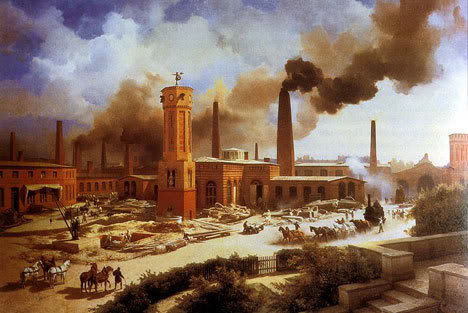
The technological discoveries and innovations of the 17th-18th centuries have a great impact of today’s modern lifestyle. During those times, a great transition occurred that resulted into a better transformation of different civilizations in the entire world. At first, it started in England until it penetrated in most European countries and later it reached in America. Industrial Revolution, that’s the name of that period. During that time, there’s a list of inventions that really played vital roles for the improvement of the society. Thus, that particular time became a very significant turning point of some other great events in history.

Different tools, machines, other forms of technologies and discoveries were the highlights during that time. They made production faster and easier; thus the old society which was patterned into an agricultural economy have changed drastically. As a result, the economy of Europe and the America boomed as the beauty of CAPITALISM was unveiled. 

xyz

Thus, it is worthy to look back and scrutinize those tools and other technology which were important players and molders of today’s history. Here is the list of inventions from the Industrial Revolution. 

1. Steam Engine

This is a kind of a heat engine (powered by water and coal) that makes a machine works in its own. The first successful steam engine was created by James Watt during the 1700’s. After that, manual labors were minimized as machines replaced the bare hands of the people. So things were done easier and faster in factories, mines, mills, railroads, ships, and vehicles.

2. Cotton Gin

This is a machine that can separate the cotton from its seed. This machine invented and patented by Eli Whitney became very useful in the cotton industry of the 1700s. Cotton can be used in making different products especially for clothing. Thus, during that time many businessmen and entrepreneurs in North and South America took advantage with this technology. And America became the cotton powerhouse that supported the world market next to Great Britain. On the other, it created a negative impact in slavery. Many black Africans were transported and sold to Europeans businessmen in America in order to maintain vast plantations of cotton. It even ended in a bloody American Civil Wars. 

3. Telephone

Telephone came up when Graham Belle wanted to improve the Telegraph in 1870. If telegraph was using Morse code to send messages, Belle used his own musical approach which was using notes, pitch, wire, and electrical signals. And successfully, he made it in 1876 while telegraph was starting to vanish.

4. Incandescent Light Bulb

Perhaps this is the most famous invention made by Thomas Edison. This was a made by doing a lot of trial and error. However, this man also made other significant inventions just like the electrical power. And all these made more advancements and productivity in different fields of societies.

5. Sewing Machine

This machine was made in 1790 by Thomas Saint. Thus, clothing production increased compare to using manual labors during that time. So, many companies and factories were very happy and satisfied as their earnings and profits increased.  Then this simple sewing machine was innovated over time with different features like the safety devices to prevent accidents.


All these things were just some of the leading tools and discoveries during the innovation process of the 17-8th centuries. And all those inventors are worthy of appreciation as they have changed the world as well as its history. Though their inventions created different impacts towards the lives of men, but after all, they made a big difference. In the end, this list of inventions from the Industrial Revolution is just a reminder that people can make a change if they are willing to make it happen by DOING it.