Friday, January 17, 2014

A History of Black people in Europe


It is generally known that black people have been residing in European countries since the early colonial times. But even before the 15th century and during Roman times, a time when colour of skin still wasn’t a racist stigma but just another physical feature, black people lived in Europe. Remains of a man with black African features were found in England, dating his life back to the 13th century.

Besides that, facts have been found of black people living in different parts of Europe, although I don’t want to overstate their presence or influence. But it is generally known that during the Muslim era of the Iberian Peninsula (from the 8th century AD until the 15th century AD) people with dark skin were part of daily live. The Muslims who invaded Spain and Portugal around 700 AD were a mixture of black and dark people from North-Africa. They were often referred to as Maures, wrote about and painted, way before the dehumanization of black people started.

I added above Jan Mostaert's portrait of a nobleman, guest of the Queen of Austria. This painting dates back to the early 1500's in what we now call Belgium, then part of the Duchy of Brabant. There is no doubt this man has African roots while being a respected member of European culture. We can only guess that this man is of Maure origin, i.e. a Muslim having converted to Christianity or even the second or third generation of converts.

Below I will go deeper into the subject. I will give you some internet links, book references and a list of early Europeans of African descent, each time linked to their wiki page. If you know more about the subject I invite you to add information in a comment.


Al Andalus


Many blacks who were Muslims converted to Christianity after the emirate ofAl Andalus was abolished (end of 15th century). But the Reconquista took centuries (8th-15th century) and during those times black people gradually integrated the Christian and Northern European world. Among them were noble men and scholars. The negative image of blacks, as natural slaves, only gained prominence in the 18th century when the transatlantic slave trade became a central piece of European economical activity and later when European nation-states were being established.

Slavery and racism

Of course slavery existed before racism. In the 15th century blacks and whites were enslaved indiscriminately. Blacks in the America’s could become free men and own their own slaves and land (which was rather common in colonial Brazil for instance). It is only in later years that being black made you a slave forever and by birth, or at least a kind of human always inferior to white people. This racial perspective on identity and humanity only gained authority in later modern times. Read more on the subject here.

Coat of Arms

Black people were part of European imagination and reality from very early times. Read more here and here. We can say with certainty that there were black people in Europe before that white people reached the area south of the Sahara. North Africa, Iberia and the Middle East were the crossroad where black and white intermingled. In Europe references to blacks was a positive sign of strength and military power. Still today you can find many blacks in coat of arms for towns all over Europe, central, south and north, dating back to the middle ages.


Some Literature

After the 15th century, Portugal entered an intense relationship with African kingdoms in the Gulf of Guinea and the Congo coasts. Slave trade (although not based on race) and exchange between the kings led to the presence of Europeans on the West- and Central African shores, just as Africans in Portugal. Accounts from those days tell us that the sight of black people in the streets of Lisbon wasn’t a rarity during the Middle Ages, more on the contrary. I want to refer to following books for those who want to know more about this topic:
Black Africans in Renaissance Europe, Thomas Foster Earle,K. J. P. Lowe(eds.)
Africa's discovery of Europe, David Northrup 

As a consequence of the slave trade free blacks also arrived in Europe between the 16th and 19th century. Blacks lived in London, Liverpool, Lisbon, Seville, … during the 17th and 18th century. Other historical books with scientific authority give you in depth knowledge of this:
Hugh Thomas’s ‘The Slave Trade’
Ivan Van Sertima’s ‘African Presence in Early Europe’
All this publications teach us something about this hidden part of European history.

Leo Africanus

Leo Africanus is often stated as one of these black and European noble men and scholars. But it is rather speculation to state if he was black or white. He was definitely a Maure but as racism, whiteness and blackness were unknown concepts as we know it today, we can’t know his ‘race’ for sure. This shouldn’t surprise anyone. Even very common socio-cultural concepts of today such as ‘French’, ‘German’ or ‘English’ didn’t exist in those days such that it would be silly to argue whether historical figures of those days were German or French. Same thing is valid for the white and black race as defined today.

Famous Europeans with African ancestry (1500-1900)

Below I will list some of the most famous figures of European modern history (after 1500) who happened to be black or have African ancestry, but were integral parts of European (high) society. Most of the time the African ancestry of these people is ignored by history books although acknowledged and accepted by most history scholars. I think it throws a new light on the concepts of race and the meaning of blackness in the 21st century.

Alessandro ‘il Moro’ de Medici 1510-1537 
Duke of Florence


Abram Petrovich Ganibal 1696-1781

Major-general, military engineer, governor of Reval and nobleman of the Russian Empire


Anton Wilhelm Amo 1700-1775 

German Philosopher


Ignatius Sancho 1729–1780

Author and abolitionist, UK

Olaudah Equiano a.k.a. Gustavus Vassa 1745-1797Author and abolitionist, UK

Chevalier de Saint Georges 1745-1799A famous musican, composer and swardsman of his times
Listen to his music here.

Thomas Alexandre Dumas 1762-1806A general of the French Revolution

George Polgreen Bridgetower 1780-1860Musician and composer
Listen and watch here


Alexandre Pushkin 1799-1837

Famous author, great-grandson of Abraham Petrovich Ganibal

Alexandre Dumas 1802-1870
French author of the world famous tale of ‘The Three Musketeers’, Thomas Alexandre Dumas’s son

John Archer 1863-1931
Presumably UK’s first black mayor, political activist

Samuel Coleridge-Taylor 1875-1912
The List of Inventions from the Industrial Revolution

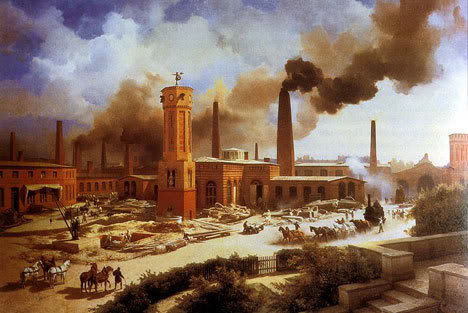
The technological discoveries and innovations of the 17th-18th centuries have a great impact of today’s modern lifestyle. During those times, a great transition occurred that resulted into a better transformation of different civilizations in the entire world. At first, it started in England until it penetrated in most European countries and later it reached in America. Industrial Revolution, that’s the name of that period. During that time, there’s a list of inventions that really played vital roles for the improvement of the society. Thus, that particular time became a very significant turning point of some other great events in history.

Different tools, machines, other forms of technologies and discoveries were the highlights during that time. They made production faster and easier; thus the old society which was patterned into an agricultural economy have changed drastically. As a result, the economy of Europe and the America boomed as the beauty of CAPITALISM was unveiled. 

xyz

Thus, it is worthy to look back and scrutinize those tools and other technology which were important players and molders of today’s history. Here is the list of inventions from the Industrial Revolution. 

1. Steam Engine

This is a kind of a heat engine (powered by water and coal) that makes a machine works in its own. The first successful steam engine was created by James Watt during the 1700’s. After that, manual labors were minimized as machines replaced the bare hands of the people. So things were done easier and faster in factories, mines, mills, railroads, ships, and vehicles.

2. Cotton Gin

This is a machine that can separate the cotton from its seed. This machine invented and patented by Eli Whitney became very useful in the cotton industry of the 1700s. Cotton can be used in making different products especially for clothing. Thus, during that time many businessmen and entrepreneurs in North and South America took advantage with this technology. And America became the cotton powerhouse that supported the world market next to Great Britain. On the other, it created a negative impact in slavery. Many black Africans were transported and sold to Europeans businessmen in America in order to maintain vast plantations of cotton. It even ended in a bloody American Civil Wars. 

3. Telephone

Telephone came up when Graham Belle wanted to improve the Telegraph in 1870. If telegraph was using Morse code to send messages, Belle used his own musical approach which was using notes, pitch, wire, and electrical signals. And successfully, he made it in 1876 while telegraph was starting to vanish.

4. Incandescent Light Bulb

Perhaps this is the most famous invention made by Thomas Edison. This was a made by doing a lot of trial and error. However, this man also made other significant inventions just like the electrical power. And all these made more advancements and productivity in different fields of societies.

5. Sewing Machine

This machine was made in 1790 by Thomas Saint. Thus, clothing production increased compare to using manual labors during that time. So, many companies and factories were very happy and satisfied as their earnings and profits increased.  Then this simple sewing machine was innovated over time with different features like the safety devices to prevent accidents.


All these things were just some of the leading tools and discoveries during the innovation process of the 17-8th centuries. And all those inventors are worthy of appreciation as they have changed the world as well as its history. Though their inventions created different impacts towards the lives of men, but after all, they made a big difference. In the end, this list of inventions from the Industrial Revolution is just a reminder that people can make a change if they are willing to make it happen by DOING it.   

Who is Cleopatra?

Cleopatra… Perhaps you hear this famous name in history. Yes she is indeed an interesting woman for you to know. She is even controversial too and she can be one of the most powerful women in this world. 

So, who is Cleopatra?

Cleopatra was the last queen ruler of Egypt after the Roman power took place. But before Egypt fell to the mighty hands of Rome, a great controversial and tragic story happened about Cleopatra’s life.

The leadership of Cleopatra’s family in Egypt could be traced after the death of Alexander the Great. Ptolemy, one of the generals of Alexander took over Egypt and he became a king. Now Cleopatra’s father was King Ptolemy XII, a descendant of the first Ptolemy. So, Cleopatra’s nationality is of Greek origin.

When Cleopatra’s father died in 51 B.C., Cleopatra and her brother were left. It was also believed the two got married as part of their custom. However, Egypt that time faced a lot of crisis such as famine, floods, problems in the economy, and most of all political tensions. Cleopatra and her brother had conflicts in political issues. Cleopatra wanted the throne badly. But during this time, Egypt was also endangered to the powerful Rome with the Leadership of Julius Caesar.

 Cleopatra’s Seduction to Julius Caesar

Julius fell in love with Cleopatra when he went in Egypt to follow his enemy named Pompey who was the husband of Caesar’s daughter. But Ptolemy XIII showed to Caesar the head of Pompey thinking that he wouldn’t be angry. So, because of Caesar’s anger to him, he captured the center of Egypt. And Cleopatra took advantage of his anger and she seduced him and she supported the idea of ousting Ptolemy XIII. Thus, she succeeded when Julius army defeated Ptolemy XIII in the Battle of Nile. After that, Ptolemy died. So, Cleopatra became a mistress of Julius Caesar because he was married in Rome. After that they had children. So the plans of Caesar in capturing Egypt were stopped. And he even became very obsessed to Cleopatra that he made a golden statue of her in Rome. However, people didn’t like how he acted as their leader for he was a married man. Therefore, it is no wonder that he was being assassinated in 44 B.C.

 Cleopatra Got Caesar’s Son- Mark Antony

Well, the story didn’t end up in Caesar’s death. Cleopatra’s charm and beauty continued its power. This happened when she supported Mark Antony as one of leader among the factions in Rome after Caesar’s death. Because of her loyalty and support for Antony, the met and eventually fell in love with each other. Their love resulted when Cleopatra gave birth to twins and another child. And later, he married her according to Egyptian rites though at that time he was a married to Octavian. Because of this, Octavian raged war to Cleopatra and Antony. But while Antony was in the battlefield, he heard false news that Cleopatra died. With this, he committed suicide by stabbing himself. And when Cleopatra heard this news, she also committed suicide by letting herself bitten by a cobra. Actually, her death was a big debate. But the similarities of the stories are that she committed suicide by taking a poison. After that, Egypt became a province of the mighty Roman Empire.


What makes Cleopatra that attractive?

With this controversial and tragic story of Cleopatra, you will really wonder how beautiful and attractive she is. But who is Cleopatra? What made her so appealing and so seductive to men? Especially during those days, countries and empires were led by the dominant and fearless men. And yet, she managed to lure them just to stay in power…

Accordingly, she was not that very beautiful. But her charm and wit was incomparable. Well, that was unquestionable with those historical proofs. However, many would mark some thoughts of negativity towards her actions. She may be a lewd woman and greedy or whatever reasons. But what makes it important for people in this present time is to think how a woman could be as powerful and as wise as Cleopatra.

What to Avoid During Pregnancy in Medieval Times

A lot of medical practices that we observe now can be traced back to the past. We are fortunate that we have access to modern medicine and pregnant women get the care they need without the risk of infection, worse death. The middle ages is known as the Renaissance, where artists, philosophers and doctors have cooked up many ways to make living easier. Some of it may seem mad but believe it or not, people actually observed it. Here is a list of what to avoid during pregnancy.

Michele Savonarola, court physician of the powerful Este family of Ferrara in Italy wrote a book called De Regime Pregnantium. It contained advice of food and drinks that should and should not be taken during pregnancy. Like physicians today, Savonarola believed that what the mother eats will greatly affect her unborn child. He not only dedicated his life and expertise in taking care of the pregnant noblewomen of Ferrara but he also thought of medical ways to ensure the health of both mother and child, most especially in making sure that the baby would be male.

Savonarola advised that mothers consume dry food. He further stated that it was best to avoid drinking cold water because it is not good for the fetus and would generate girls. Instead he advised that moms drink red wine instead. Furthermore, consumption of warm and dry food will remove the inferior qualities of women and shape the fetus to become a strong and healthy male.

There could be strong intellectual women at that time who rolled their eyes at him; but in a world dominated by men, their opinions hardly matter. Members of the nobility would rejoice in the coming of a son but not so much as daughters.

He also advised mothers not to overindulge in the same kind of food because it risks miscarriage. Fruits like the pomegranate, though sweet is not advisable because it is highly acidic which can upset the stomach. It would be better to mix it with wine or drink is as a juice.

That was the practice in Italy, but what about other places? What to avoid during pregnancy when you’re a noble woman in England during the middle ages? In the late stages of pregnancy, noble women would go into confinement. This is like going back inside the womb where women are shut in a room, shutters closed, drapes drawn and a crucifix so she can pray. She is attended by servants and only female members of her family. Although, there were times that her husband may come visit her.  The idea of a confinement is to make sure that the woman is relaxed. She will only come out after 40 days of giving birth. She will then be “churched” to cleanse her.  There is a big party to welcome her back to society, perform her duties as wife and back to breeding babies again.

These practices and medical advice may all seem mad to us modern people but this paved the way to what we practice today. Crazy as it may seem, some of these food, drinks and practices make sense.  Hopefully, you did find what to avoid during pregnancy in medieval times insightful or even perhaps an entertaining read.

Reasons Why Middle Ages is Also Called “Dark Ages”

The Middle Ages is one of the greatest period not only important in the European History but also of the entire world.  There are thousands of beautiful, controversial, and critical stories about it. However, sometimes you may be confused about it because it is also sometimes called Dark Ages. 

However, it is not the entire period of Middle Ages is considered as the “DARK” one. It could be in the first or in the middle of it that it became dark. There are different explanations too which are being formulated by different Historians. So, there’s no exact explanation because there are many factors being considered why this particular period was considered as “dark”.

So, for you to have a clearer picture on what is it all about, here are the reasons why Middle Ages is also called Dark Ages.

1.  Rome during this time was the greatest empire in the world. Its scope was very wide with the help of their great leaders such as Julius Caesar, Augustus Aurelius, and many other great Roman leaders. However, time came when there were no more leaders like them, Rome slow down and its economy and the whole system of the entire empire fell down. Many problems arise like no able leaders, corruption, civil wars, and most importantly was the barbarian invasions. These barbarian invasions of the Visigoths, Ostrogoths, etc. from Germany and from North Europe just entered and invaded Rome when the empire itself was already weak. So, this event makes the Middle Ages dark because of so many chaos. Just imagine how barbarians killed a lot of Romans brutally. Since barbarians were known for this…

2.       The Crusades

Crusades were also the Holy wars led by the popes in the Roman Empire with the aim of preserving Christianity over Islam faith in the countries or places that surrounded the Holy City- Israel. The people or the warriors who joined the crusades were of mixed reasons why they joined. Some really wanted to stand firm in the Christian belief and defend it. However, others who were sent by their lords to join may had different motives like for money, territory,, discoveries, etc. And because crusades were holy wars, many people have died; lost their money and properties in supporting it; and even the Roman Empire itself lost one or some of its territories and wealth.

3.       Intellectual Stagnation

Since during these times, there were many wars from invaders as well as civil wars, the education or the intellectual side of Rome did not flourish. And especially that the barbarians who invaded were not that educated as the Romans. Therefore, intellectual things stopped and some even vanished. But good that the monasteries which were being taken care of by the monks were able to safeguard some important data in History and other fields of   education. Accordingly, even some historical data disappeared during the slaughter of the barbarians. Therefore, this particular period became dark because “things were not that known”. There was little information only about this era. Thus it’s not clear. This reason is always being point out by the futuristic historians.

There are many things for you to dig in for you to know the whole thing. Just keep reading anyway. I’ll be posting a part 2 of this topic. I hope these reasons why Middle Ages is called “Dark Ages’ help you to understand about this matter. 

Tuesday, January 14, 2014

History Of Tom & Jerry

Tom and Jerry, two of the most honored cartoon characters in motion pictures, were created by William
Hanna and Joseph Barbera for Metro-Goldwyn-Mayer. Their plot centered on a never-ending battle, in other words, a chase between a housecat and a brown mouse. The Hanna- Barbera duo had written and directed 114 Tom and Jerry cartoons from 1940 to 1957, at the MGM cartoon studio in Hollywood. The pair won a total of 7 Oscar awards for Best Animated Short Subject, more than any other character-based theatrical animated series. The series has also been named as the ‘Greatest Television Shows of All Time’ by TIME, in 2000. Tom and Jerry was also placed at the 66th position, in the ‘Top 100 Animated TV Shows’ by IGN, in January 2009. Read on to know interesting and amazing information on the history, origin and background of Tom and Jerry.

Interesting & Amazing Information On Origin & Background Of Tom & Jerry


Joseph Barbera, a storyman and character designer, paired up with an experienced director, William Hanna to create a cat-and-mouse cartoon. The first cartoon was titled ‘Puss Gets the Boot’ and it released in theatres on February 10, 1940. Having lost to another MGM cartoon at the Academy Awards, Hanna and Barbera held a contest to give the cat and mouse a new name and look. Animator John Carr won the contest, with his suggestion of Tom and Jerry. The series went into production and eventually, Hanna and Barbera went on to direct only the cat-and-mouse cartoon, for the rest of their tenure at Metro-Goldwyn-Mayer (MGM).


The main protagonist, Tom was a blue-grey longhair cat while Jerry, the second protagonist, was a small & brown, house mouse. The physical appearances of both Tom and Jerry were evolved over the years. The series developed into a quicker, more energetic tone. Though the original theme of the series, cat chases mouse, remained the same, Hanna and Barbera came up with numerous variations on this theme. The final shot of Hanna and Barbera was ‘Tot Watchers’, which released on August 1, 1958, after the MGM cartoon studio closed down in 1957. Later, Hanna and Barbera opened up their own television studio, Hanna-Barbera Productions, in 1957 and went on to produce various famous TV shows and movies.

In 1960, Czech-based animation director, Gene Deitch from Rembrandt Films was contracted by MGM to

produce new Tom and Jerry shorts. A total of 13 shorts were released under this contract. These episodes were not very favorably received by the general audience. In the early 1963, Chuck Jones, who was fired from Warner Bros. Cartoons, started his own animation studio and produced a total of 34 Tom and Jerry shorts. The main characters were given a changed appearance, with Tom getting thicker eyebrows, a less complex look, sharper ears and furrier cheeks. Jerry got larger eyes and ears, a lighter brown color and a sweeter Porky Pig-like expression. The year 1965 saw the Hanna and Barbera cartoon series airing on television, in heavily edited form.

The Jones series featured Mammy Two-Shoes. Eventually, she was replaced by a fat White Irish woman, as in ‘Saturday Evening Puss’. The series were translated into various foreign languages, since it had almost no dialogues. It started broadcasting in Japan in 1964. Since then, Tom and Jerry cartoons have been airing on television everyday in India, Germany, South East Asia, the Middle East, Kazakhstan, Pakistan, Argentina, Mexico, Columbia, Brazil, Venezuela, other Latin American countries and in eastern European countries. Various Tom and Jerry movies have also been released such as ‘Tom and Jerry: The Movie’, ‘Tom and Jerry: The Magic Ring’, ‘Tom and Jerry: Blast Off To Mars’, ‘Tom and Jerry: The Fast and the Furry’ and ‘Tom and Jerry: A Nutcracker Tale’.

TOM & JERRY


Tom and Jerry together form an Academy Award winning pair of a cat (Tom) and a mouse (Jerry). The shorts of Tom & Jerry were written, and directed by William Hanna and Joseph Barbera for MGM (Metro-Goldwyn-Mayer).  Their first appearance was in “Puss Gets the Boot”.

In each short Tom is shown trying unsuccessfully trying to catch Jerry. In some shorts they both are seen as going along very well and there is no particular reason shown as to why Tom is always desperately chasing Jerry all the time but irrespective of the reason the chase given by Tom to Jerry has always been admired by viewers. In most cases Tom is unable to catch Jerry simply because Jerry is smarter and more cunning than Tom. The shorts of Tom & Jerry have had the most violence ever in he field of animation though it never involved blood or gore in any scenes. In several shorts Tom and Jerry are shown trying to murder each other with axe, pistols, and explosives along with using whatever is handy as a weapon to hit each other. Music has always played a very important role in all the Tom and Jerry shorts enhancing the emotions in the scenes. The music for the shorts was created by music director Scott Bradley.

While Tom is depicted as bluish-grey housecat, Jerry is shown as a small brown mouse living in the same 

house. Even though Tom is very energetic he is unable to catch Jerry as Jerry is too smart for Tom. In most of the shorts Jerry is shown as winning in end but in some rare shorts Tom wins and Jerry loses. Even though both take pleasure in hurting each other they help out each other when one of them is in serious danger and then they end up being friends. Tom and Jerry are rarely, if ever, shown speaking. Most of the sound effects for the pair were provided by William Hanna also the co-director of the series.  A vicious bulldog is the protector and guarding angel of Jerry in some shorts. He is friendly towards the mouse but is aggressive towards the cat

Early shorts showed that Mammy Two Shoes was the housemaid of the house where Tom lives. Her face is
never shown, only her voice is heard and she punishes Tom whenever he misbehaves. She appeared in many shorts till 1952 when Tom was shown living with a couple. After this Tom’s ownership again changes to a woman who is very strict, adores mice and punishes Tom for chasing Jerry.

When “Puss Gets the Boot” was released to theatres on February 10, 1940 no one had imagined that this cat and mouse pair will become so famous. In this short the mouse breaks every fragile thing he can gets his hands so that the cat will be blamed and thrown out of the house. Hanna and Barbera started working on other shorts. The attitude towards the short changed only when it became a favorite with theater owners and was nominated for Academy award for best Short subject ultimately losing out to another MGM cartoon “The Milky Way”.  Realizing the potential of the cat and mouse short, Fred Quimby, asked Hanna and Barbera to drop other cartoons they were working on and asked them to work on a series featuring the cat and mouse. It was animator John Carr who suggested the name of “Tom and Jerry”. Since the Tom & Jerry went into production in 1941 with the release of “The Midnight snack” Hanna and Barbera directed nothing else except for the Tom and Jerry series.

Shorts of Tom and Jerry were nominated thirteen times for the Academy Award for Best Short Subjects: Cartoons category and went on to win the award seven times. Tom and Jerry has won more Academy Awards than any other animated series. The shorts which won the Academy Awards are “Yankee Doodle Mouse” (1943), “Quiet, Please”(1945), “The Cat Concerto” (1947), “Mouse Cleaning” (1948), “Two Mouseketeers” (1952), and “Johann Mouse” (1953).

After TV started making a dent in revenues of animated shorts, MGM executives decided to close the animation studio. The last of Hanna and Barbera Tom and Jerry shorts “Tot Watchers” was released on August 1, 1958. After Gene Deitch and chuck Jones took charge of Tom and Jerry in 1961 and 1963 respectively, the Hanna-Barbera Studio bought Tom and Jerry from MGM in 1975. They made 48 cartoons between 1975 and 1977 when the series finally ended.

Indian Railway


By the word run a train we mean a vehicle with motive power running on metal rails.

" The Stockholm and Darlington Railway" (1825) is recognised as  the starting of railway age, because they were the first "Railway" to use a steam locomotive and iron rails to haul a load. It was a load of 38 carriages laden with passengers and goods ran between Stockton and Darlington. The railway line was actually commenced in 1821, but it took 4 years to complete construction.

Prior to this in 1801 Richard Trevithick made the steam carriage and in 1804 constructed a locomotive to haul a 10-ton load not on the rails but on the roads.

For other countries the list is as follows:

Now let us see about India.

       The core of the pressure for building railways in India came from London in 1840s. For a century thereafter the basic policies and ultimate management of the Indian Railways were issued from London. The British built railways in India in order to intermesh the economies of the two countries. The building of railways in India brought about unintended as well as hoped for consequences in economic, political and military front. The new railways tied the the different parts of India together more closely than ever before.

       Some mention should be made of the role of Indian businessmen played in the early years. There were Indian merchants , both in Calcutta and Bombay who took an interest in founding of the railways. The most prominent of these was a remarkable Bengali merchant Prince Dwarkanath Tagore , grandfather of Nobel laureate poet Rabindranath Tagore. Dwarkanath's firm Carr, Tagore & Company, is reported to have offered in 1844, to raise one-third of the capital required for a railway from Calcutta northwest to the coalfields above Burdwan. After Dwarkanath's premature death a few tears later the other Indian businessmen played only a passive role. The conception, promotion and launching of India's railways were all British. ( Daniel Thorner 1955)    

The Railway Age dawned in India on 16th. April 1853, when the first train ran from Bombay to Thana, a distance of 21 miles(33.81 Km.) For some years before that the idea of building railways in India had taken concrete shape with the Court of Directors of the East India Company in London. The East India Company had obtained a foothold in India as a trading company, but gradually lost most of its privileges it had enjoyed as an instrument of commerce. It had , however been made responsible for the governance of India under the supervision of a Court of Directors in London. The final authority lay , of course , with the British Cabinet, who acted on the advice of its special Board of \control for Indian Affairs. There was a Governor General at Fort William in Calcutta, having superintending authority over the administration of India. 
       The first proposals for construction of railways in India were presented in 1844 to East India Company in London by, (a) East Indian Railway Company headed by R.McDonald Stephenson, and (b) Great Indian Peninsula Railway Company.


George Stephenson the great British Locomotive inventor was one the first Directors of GIPR and his son Robert Stephenson was appointed as the consulting engineer based at London.

        Both E.I.R. and G.I.P.R were incorporated in England for the purpose of constructing railway lines in Calcutta and Bombay presidencies respectively. Though GIPR company was formed in 1844. George Stephenson could not see his Locomotives run on Indian soil as he died in 1848. 

       Lord Hardinge was the Governor General of India at this point of time. He considered the proposals from political, military and commercial point of view and thought that Court Of Directors of East India Company should liberally give assistance to private capitalists, willing to make railways in India , without waiting for proof that the construction of railways in India should yield reasonable profit. The Court of Directors in their suggestion that the first attempt should be made on a limited scale due to some difficulties, deliberated as under,

1. Periodical rains and inundations;
2. The continued action of violent winds, and influence of a vertical
     sun;
3. The ravages of insects and vermin upon timber and earth work;
4. The destructive effect of spontaneous vegetation of Underwood
     upon earth and brick  work;
5. The unenclosed and unprotected tracts of the country though which 
     railroads would pass; 
6. The difficulty and expenses of securing the services of competent
     and trustworthy engineers.  

How do you feel about these apprehensions about 150 years ago ?

The development of railways in India started on all sides after successful initial projects in the west and the east.


West : On 16th April, 1853 the first railway on Indian sub-continent ran over a stretch of 21 miles from Bombay to Thane . The idea of a railway to connect Bombay with Thane, Kalyan and with the Thal and Bhore Ghats inclineFirst train run in Bombay first occurred to Mr. George Clark, the Chief Engineer of the Bombay Government, during a visit to Bhandup in 1843.The first Indian train steamed off from Bombay(Bori Bunder) to Thane  on 16th. April 1853, at 3:30 P.M. "amidst the loud applause of a vast multitude and to the salute of 21 guns." The train consisting of 14 carriages was hauled by three locomotives named Sultan, Sindh and Sahib with 400 VVIPs The formal inauguration ceremony was performed on 16th April 1853, when 14 railway carriages carrying about 400 guests left Bori Bunder at 3.35 PM. 

     In the East : 

       The Survey from Calcutta to Delhi was carried out by Mr. Stephenson during 1845-46. The construction of railway line from Howrah to Raniganj was sanctioned only after 3 years. But by the end of 1853 61 kms. of line was ready upto Pandooah. Two historical incidents denied  EIR , the first position in history of railways in India.. The Locomotive Engine and the carriages for both the  trains of Bombay and Howrah were despatched from England almost at the same time, but the ship carrying the loco for E.I.R. (HMS Goodwin) was misdirected to Australia and the other carrying the carriages for Howrah  sank  at Sandheads. Otherwise Howrah would have had the legacy of running the first train in India. The Locomotive Engine and the carriages for both the  trains of Bombay and Howrah were despatched from England almost at the same time, but the ship carrying the loco for E.I.R. (HMS Goodwin) was misdirected to Australia and carriages for Howrah  sank  at Sandheads.  The other problem faced was that the line was aligned through Chandernagore (Chandannagar) which was a French territory at that time. The settlement of this dispute with french rulers of Chandernagore also took considerable time. The Locomotive reached Calcutta via Australia and a trial run was made on 28th. June 1854. The coaches for the first train was however manufactured by two Calcutta based companies Steward & Company and Seton & Company. Otherwise Howrah would have had the legacy of running the first train in India.  

           The first passenger train steamed out of Howrah station destined for Hooghly, (click) a distance of 24 miles, on 15th August, 1854. Thus the first section of the East Indian Railway was opened to public traffic, inaugurating the beginning of railway transport on the Eastern side of the sub-continent.  

          From 15th August 1854, the company ran regular services, morning and evening, between Howrah and Hugli with stops at Bally, Srerampore and Chandannagar. The fare ranged from Rs.3 by first class to 7 annas by third class. The main booking office was on the Calcutta bank, at the Armenian Ghat, and the fare covered the ferry to the station. At the Howrah end, the station consisted of a tin shed and a single line flanked by narrow platforms, somewhat to the south of the present station building constructed between 1901 and 1906.

       In the South the first line was opened on Ist July, 1856 by the Madras Railway Company. It ran between Veyasarpandy and Walajah Road (Arcot), a distance of 63 miles. the first line was opened on Ist July, 1856 by the Madras Railway Company. It ran between Veyasarpandy and Walajah Road (Arcot), a distance of 63 miles.

      In the North a length of 119 miles of line was laid from Allahabad to Kanpur on 3rd March 1859. The first section from Hathras Road to Mathura Cantonment was opened to traffic on 19th October, 1875.

         The first locomotive built in India : The F-734 built in 1895 by the Ajmer workshop of the Rajputana Malwa Railway. Earlier some locomotives were assembled using spares supplied with fully assembled locomotives which were imported. This locomotive with outside connecting and side rods was used on Rajputana Malwa & Bombay Baroda & Central India Railway systems.

          These were the small beginnings which is due course developed into a network of railway lines all over the country. By 1880 the Indian Railway system had a route mileage of about 9000 miles.
( Source : Old Eastern Railway Magazines of 1953)

Here are some of the many commemorative postage issued in India for different occasions of Indian Railways.